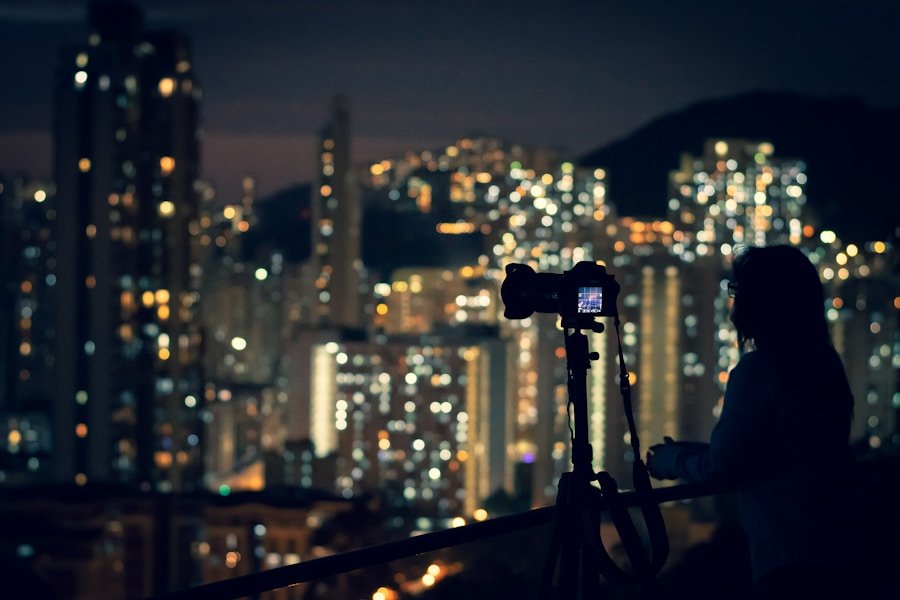

Understanding exposure is crucial for capturing high-quality photographs. Exposure refers to the amount of light that reaches the camera sensor, and it is determined by three main factors: aperture, shutter speed, and ISO. Aperture controls the amount of light that enters the camera through the lens, while shutter speed determines how long the sensor is exposed to light. ISO, on the other hand, measures the sensitivity of the sensor to light. Finding the right balance between these three factors is essential for achieving a well-exposed image.
Additionally, understanding the concept of exposure value (EV) is important for photographers. EV is a numerical representation of the exposure settings, and it helps photographers make informed decisions about their camera settings. By understanding EV, photographers can adjust their aperture, shutter speed, and ISO to achieve the desired exposure for their photographs. Overall, understanding exposure is fundamental for capturing stunning images, and it requires a combination of technical knowledge and artistic vision.
Using the Histogram
The histogram is a powerful tool for evaluating exposure in photography. It is a graphical representation of the tonal distribution in an image, with shadows on the left, highlights on the right, and midtones in the middle. By analyzing the histogram, photographers can determine whether an image is underexposed, overexposed, or well-exposed. A balanced histogram with a smooth distribution of tones indicates a well-exposed image, while a histogram that is skewed to one side suggests an exposure problem.
Furthermore, using the histogram can help photographers avoid clipping, which occurs when the highlights or shadows in an image are completely white or black with no detail. By monitoring the histogram while shooting, photographers can make adjustments to their exposure settings to prevent clipping and ensure that they capture all the necessary details in their images. In conclusion, the histogram is a valuable tool for evaluating exposure and ensuring that photographers capture well-exposed images.
Adjusting the Camera Settings
Adjusting the camera settings is essential for achieving the desired exposure in photography. The three main settings that control exposure are aperture, shutter speed, and ISO. Aperture controls the amount of light that enters the camera through the lens, and it also affects depth of field. Shutter speed determines how long the sensor is exposed to light, and it is crucial for capturing motion in a scene. ISO measures the sensitivity of the sensor to light, and it can be adjusted to compensate for low light conditions.
When adjusting the camera settings, photographers must consider the creative effects of each setting in addition to their impact on exposure. For example, a wide aperture (low f-stop) creates a shallow depth of field, which can be used to isolate a subject from its background. A slow shutter speed can be used to capture motion blur, while a high ISO can be used to capture images in low light conditions. By understanding how each setting affects exposure and creative control, photographers can make informed decisions about their camera settings to achieve their desired results.
Utilizing Exposure Compensation
Exposure compensation is a valuable tool for adjusting exposure in photography. It allows photographers to override the camera’s automatic exposure settings to achieve a brighter or darker image. Exposure compensation is particularly useful in situations where the camera’s metering system may be fooled by extreme lighting conditions, such as backlit scenes or high-contrast situations. By using exposure compensation, photographers can ensure that their images are well-exposed and accurately represent the scene they are capturing.
Furthermore, exposure compensation can be used creatively to achieve specific effects in photography. For example, by intentionally overexposing an image, photographers can create a high-key effect with bright highlights and minimal shadows. Conversely, underexposing an image can create a low-key effect with deep shadows and moody atmosphere. By understanding how exposure compensation works and experimenting with different settings, photographers can expand their creative possibilities and capture unique and compelling images.
Using Neutral Density Filters
Neutral density (ND) filters are essential tools for controlling exposure in photography. These filters reduce the amount of light that enters the camera without affecting color or contrast, allowing photographers to use longer shutter speeds or wider apertures in bright conditions. ND filters are particularly useful for capturing long exposures in daylight, such as silky smooth waterfalls or streaking clouds. They can also be used to achieve shallow depth of field in bright sunlight without overexposing the image.
Additionally, ND filters come in various strengths, measured in stops of light reduction. By using different strengths of ND filters, photographers can achieve different creative effects and control exposure in a variety of lighting conditions. For example, a 3-stop ND filter may be sufficient for slightly reducing light in moderately bright conditions, while a 10-stop ND filter is necessary for long exposures in bright daylight. Overall, ND filters are indispensable tools for controlling exposure and achieving creative effects in photography.
Post-Processing Techniques
Post-processing techniques are essential for fine-tuning exposure and enhancing images after they have been captured. Software such as Adobe Lightroom and Photoshop offer a wide range of tools for adjusting exposure, contrast, and color balance to achieve the desired look for a photograph. Exposure adjustments can be made using tools such as exposure sliders, tone curves, and graduated filters to selectively adjust different areas of an image.
Furthermore, post-processing techniques can be used to recover details from overexposed or underexposed areas of an image, as well as to correct color casts or white balance issues. By carefully editing images in post-processing, photographers can bring out the full potential of their photographs and create stunning final results. However, it is important to use post-processing techniques judiciously and with respect for the integrity of the original image.
Practice and Patience
Finally, mastering exposure in photography requires practice and patience. Experimenting with different camera settings, lighting conditions, and subjects is essential for developing an intuitive understanding of exposure and how it affects the final image. Additionally, learning from mistakes and analyzing unsuccessful images can provide valuable insights into how exposure settings can be adjusted to achieve better results.
Furthermore, patience is crucial for waiting for the right lighting conditions and capturing the perfect moment. Whether it’s waiting for golden hour light or patiently adjusting camera settings to capture a fast-moving subject, patience is essential for achieving great results in photography. By continuously practicing and refining exposure techniques, photographers can develop their skills and create stunning images that effectively convey their artistic vision.
In conclusion, understanding exposure is fundamental for capturing high-quality photographs. By mastering exposure settings, utilizing tools such as histograms and neutral density filters, and employing post-processing techniques, photographers can achieve well-exposed images that effectively convey their creative vision. However, achieving mastery in exposure requires practice and patience, as well as a willingness to continuously learn and experiment with different techniques. With dedication and perseverance, photographers can develop their skills and create compelling images that showcase their unique perspective on the world.