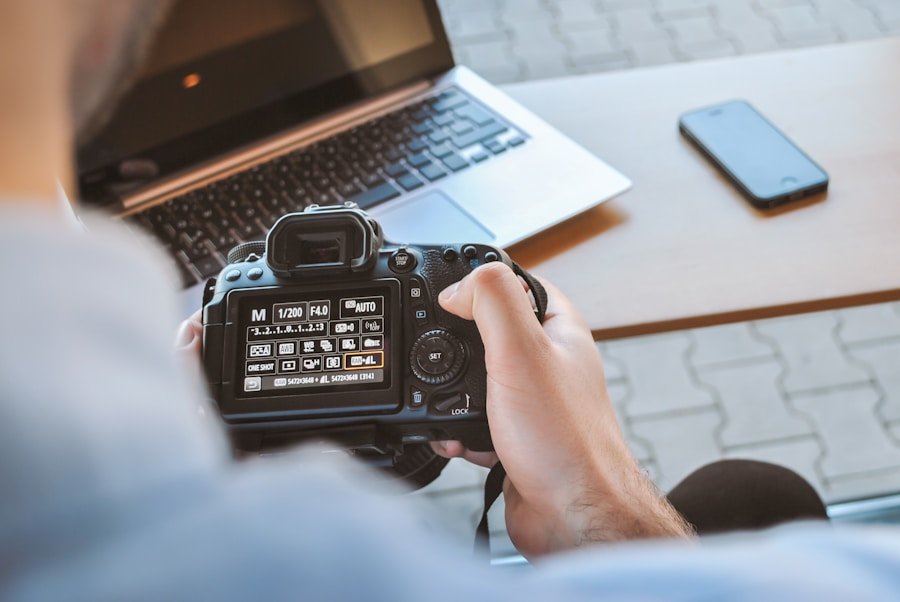

Understanding your camera settings is crucial for capturing the best possible images. The first setting to familiarize yourself with is the aperture, which controls the amount of light that enters the camera. A wider aperture (lower f-stop number) allows more light in and creates a shallower depth of field, while a smaller aperture (higher f-stop number) lets in less light and creates a deeper depth of field. Next, the shutter speed determines how long the camera’s sensor is exposed to light. A faster shutter speed freezes motion, while a slower shutter speed allows for motion blur. Lastly, the ISO setting controls the camera’s sensitivity to light. A lower ISO is ideal for bright conditions, while a higher ISO is necessary for low-light situations.
In addition to these basic settings, it’s important to understand other features of your camera, such as white balance, metering modes, and focus modes. White balance ensures that colors appear accurate in different lighting conditions, while metering modes determine how the camera measures light. Understanding focus modes allows you to control how the camera focuses on your subject, whether it’s through single-point autofocus or continuous autofocus. By mastering these settings, you can take full control of your camera and capture stunning images in any situation.
Mastering Composition and Framing
Composition and framing are essential elements of photography that can make or break an image. The rule of thirds is a fundamental principle that divides the frame into nine equal parts using two horizontal and two vertical lines. Placing key elements along these lines or at their intersections can create a more balanced and visually appealing composition. Another important aspect of composition is leading lines, which guide the viewer’s eye through the image and create a sense of depth. Additionally, framing your subject within the environment can add context and interest to the photograph.
Furthermore, understanding the concept of negative space can help create more impactful compositions. Negative space refers to the empty areas around the main subject, and using it effectively can draw attention to the subject and evoke a sense of simplicity and elegance. Additionally, paying attention to the background and foreground can greatly impact the overall composition of an image. By mastering these composition and framing techniques, you can elevate your photography and create visually compelling images that resonate with viewers.
Utilizing Natural Light and Artificial Lighting
Understanding how to utilize natural light and artificial lighting is essential for creating captivating photographs. Natural light provides a soft and flattering quality that can enhance the mood and atmosphere of an image. The golden hour, which occurs during sunrise and sunset, offers warm, diffused light that can add a beautiful glow to your subjects. Additionally, paying attention to the direction and quality of natural light can help create dynamic and visually striking images.
On the other hand, artificial lighting allows for more control over the light in a scene. Studio lighting, such as softboxes and strobes, can be used to create dramatic and professional-looking portraits. Understanding how to manipulate artificial lighting to achieve different effects, such as soft or harsh light, can greatly enhance the visual impact of your photographs. By mastering both natural light and artificial lighting techniques, you can elevate your photography and create images that are both technically proficient and visually compelling.
Perfecting Exposure and White Balance
Perfecting exposure and white balance is crucial for creating well-balanced and accurate photographs. Exposure refers to the amount of light that reaches the camera’s sensor, and getting it right is essential for achieving a properly exposed image. Overexposure occurs when too much light reaches the sensor, resulting in loss of detail in highlights, while underexposure happens when too little light reaches the sensor, leading to loss of detail in shadows. Understanding how to adjust aperture, shutter speed, and ISO to achieve the desired exposure is key to capturing well-exposed images.
White balance ensures that colors appear accurate in different lighting conditions. Different light sources have varying color temperatures, which can affect the overall color cast of an image. Understanding how to adjust white balance settings in-camera or during post-processing can help maintain accurate colors in your photographs. By perfecting exposure and white balance, you can ensure that your images are technically proficient and visually appealing.
Exploring Different Lenses and Focal Lengths
Exploring different lenses and focal lengths can greatly expand your creative possibilities as a photographer. Wide-angle lenses are ideal for capturing expansive landscapes or creating a sense of depth in architectural photography. They also allow for unique perspectives and distortion effects that can add visual interest to your images. On the other hand, telephoto lenses are great for capturing distant subjects or compressing perspective in portrait photography.
Additionally, understanding how focal length affects perspective and background compression can help you choose the right lens for a particular scene or subject. Prime lenses offer a fixed focal length, which encourages photographers to move around and find the best composition, while zoom lenses provide versatility by allowing you to adjust focal length without changing lenses. By exploring different lenses and focal lengths, you can expand your creative vision and capture a wide range of subjects with unique perspectives.
Editing and Post-Processing Techniques
Editing and post-processing techniques are essential for refining and enhancing your photographs. Software such as Adobe Lightroom and Photoshop offer powerful tools for adjusting exposure, contrast, color balance, and sharpness. Understanding how to use these tools effectively can help bring out the best in your images and create a cohesive visual style.
In addition to basic adjustments, understanding advanced editing techniques such as dodging and burning, frequency separation, and color grading can take your images to the next level. Dodging and burning allows you to selectively lighten or darken specific areas of an image to create more depth and dimension, while frequency separation enables you to retouch skin or other textures without affecting overall image quality. Color grading involves manipulating colors to create a specific mood or atmosphere in your photographs.
By mastering editing and post-processing techniques, you can refine your images to match your unique vision and style as a photographer.
Developing Your Unique Style and Vision
Developing your unique style and vision as a photographer is an ongoing process that requires self-reflection, experimentation, and dedication. Finding inspiration from other photographers, artists, or even everyday life can help you develop a distinct visual language that sets your work apart. Paying attention to your interests, passions, and personal experiences can also inform your creative vision and influence the subjects you choose to photograph.
Experimenting with different techniques, genres, and styles can help you discover what resonates with you as a photographer. Whether it’s documentary photography, portraiture, landscape photography, or abstract art, exploring different genres can help you find your niche and develop a signature style. Additionally, seeking feedback from peers or mentors can provide valuable insights into how others perceive your work and help you refine your artistic vision.
Ultimately, developing your unique style and vision as a photographer is about staying true to yourself and expressing your individual perspective through your images. By honing your technical skills, mastering composition and lighting techniques, and refining your post-processing workflow, you can create photographs that reflect your personal vision and resonate with viewers on a deeper level.
In conclusion, mastering photography requires a combination of technical proficiency, creative vision, and dedication to continuous learning and growth. By understanding your camera settings, mastering composition and framing, utilizing natural light and artificial lighting effectively, perfecting exposure and white balance, exploring different lenses and focal lengths, mastering editing and post-processing techniques, and developing your unique style and vision as a photographer, you can elevate your photography to new heights. Whether you’re a beginner or an experienced photographer, there’s always room for growth and improvement in this ever-evolving art form. Keep experimenting, learning from others, and staying true to your creative vision as you continue on your photographic journey.