
In today’s digital age, having a home office studio setup is essential for anyone involved in photography, videography, or any other creative work. A well-equipped and organized home office studio can make a significant difference in the quality of your work and the efficiency of your workflow. It provides a dedicated space for you to focus on your projects without distractions, and it allows you to have full control over the environment, lighting, and equipment. Additionally, having a home office studio setup can save you time and money in the long run, as you won’t have to constantly rent out studio space or travel to different locations for your work. It also gives you the flexibility to work on your own schedule and experiment with different techniques and styles without any limitations.
Furthermore, a home office studio setup can also enhance your professional image and credibility. When clients or potential employers see that you have a dedicated space for your work, it shows that you are serious and committed to your craft. It also allows you to showcase your work in a professional manner, whether it’s for portfolio purposes or for marketing and promoting your services. Overall, having a home office studio setup is not just about having a space to work in; it’s about creating an environment that fosters creativity, productivity, and professionalism.
Choosing the Right Equipment and Tools
When it comes to setting up a home office studio, choosing the right equipment and tools is crucial for achieving high-quality results. The first step is to invest in a good camera that suits your specific needs and budget. Whether you’re into photography or videography, there are a wide variety of cameras available on the market, ranging from entry-level DSLRs to professional-grade mirrorless cameras. It’s important to do thorough research and consider factors such as resolution, sensor size, autofocus capabilities, and video recording features before making a purchase.
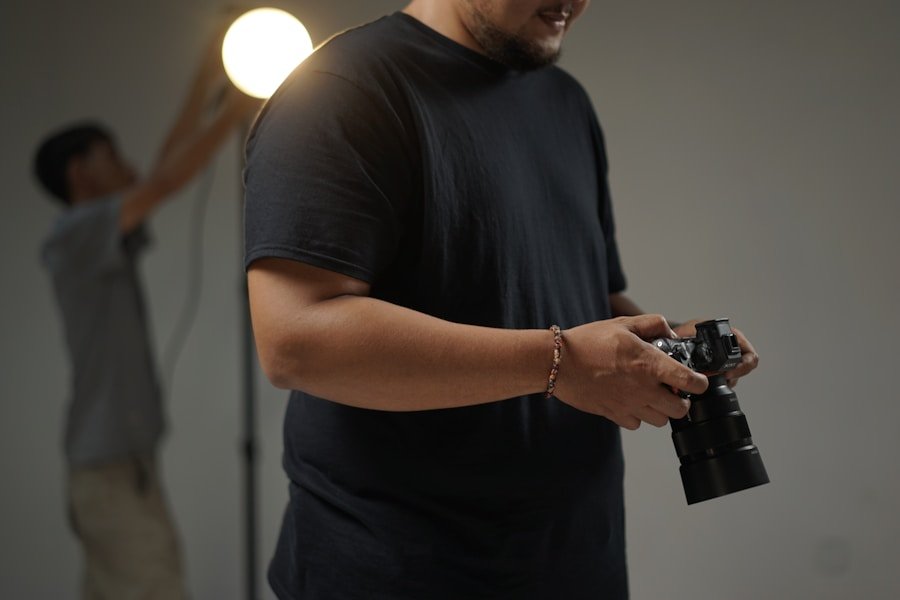
In addition to a camera, other essential equipment and tools for a home office studio setup include lenses, tripods, lighting equipment, backdrops, and props. Lenses play a significant role in capturing sharp and detailed images, so it’s important to invest in high-quality lenses that are suitable for your specific type of work. Tripods are essential for stabilizing your camera and achieving steady shots, especially when shooting in low light conditions or using slow shutter speeds. Lighting equipment such as softboxes, umbrellas, and LED panels are crucial for controlling the light in your studio and creating the desired mood and atmosphere for your photos or videos. Backdrops and props are also important for creating visually appealing compositions and adding depth and context to your work.
Setting up the Perfect Lighting
One of the most critical aspects of a home office studio setup is setting up the perfect lighting. Good lighting can make or break a photo or video, so it’s essential to invest time and effort into creating a well-lit environment in your studio. Natural light is often preferred by many photographers and videographers due to its soft and flattering qualities, but it’s not always reliable or consistent. Therefore, it’s important to have artificial lighting options such as continuous lights or strobes to supplement or replace natural light when necessary.
When setting up the perfect lighting in your home office studio, it’s important to consider factors such as the direction, intensity, color temperature, and diffusion of the light. The direction of the light can significantly impact the mood and composition of your photos or videos, so it’s important to experiment with different angles and positions to find the most flattering lighting setup for your subjects. Intensity refers to the brightness of the light, which can be adjusted using dimmers or by changing the distance between the light source and the subject. Color temperature is another crucial factor to consider, as it can affect the overall look and feel of your images or videos. Daylight-balanced lights are often preferred for their natural and neutral color temperature, but warmer or cooler lights can also be used creatively for different effects. Lastly, diffusion refers to softening the harshness of the light by using modifiers such as softboxes, umbrellas, or diffusers to create a more flattering and even light spread.
Creating a Functional Shooting Space
In addition to having the right equipment and lighting setup, creating a functional shooting space is essential for a home office studio setup. A functional shooting space should be versatile, organized, and optimized for efficiency and productivity. It should provide enough room for you to move around freely and set up different compositions without feeling cramped or restricted. It’s also important to consider the layout of your shooting space in relation to your equipment, props, and backdrops to ensure easy access and smooth workflow.
When creating a functional shooting space in your home office studio, it’s important to consider factors such as storage solutions, furniture arrangement, and workflow optimization. Storage solutions such as shelves, cabinets, and drawers are essential for keeping your equipment, props, and accessories organized and easily accessible. Furniture arrangement plays a significant role in maximizing the available space in your studio while providing comfort and functionality for both you and your subjects. Additionally, optimizing your workflow involves setting up designated areas for different tasks such as shooting, styling, editing, and client meetings to ensure a smooth and efficient process from start to finish.
Styling and Staging Your Products
Styling and staging your products is an essential aspect of creating visually appealing photos or videos in a home office studio setup. Whether you’re shooting products for e-commerce, advertising, or personal projects, styling and staging play a crucial role in showcasing the features and benefits of the products while creating an emotional connection with the audience. It involves carefully arranging the products, props, and backdrops to create visually compelling compositions that tell a story or evoke a specific mood or feeling.
When styling and staging products in your home office studio, it’s important to consider factors such as composition, color coordination, props selection, and storytelling. Composition refers to the arrangement of elements within the frame to create visually pleasing and balanced images or videos. It involves considering factors such as framing, leading lines, symmetry, and negative space to draw attention to the main subject while creating visual interest. Color coordination is also crucial for creating cohesive and harmonious visuals that complement the products and convey a specific brand identity or message. Props selection involves choosing relevant items that enhance the products and add context or narrative to the overall composition. Lastly, storytelling refers to using styling and staging techniques to create a narrative or evoke emotions that resonate with the audience and make the products more relatable and desirable.
Editing and Retouching Your Photos
After capturing your photos or videos in your home office studio setup, editing and retouching play a crucial role in enhancing the overall quality and visual appeal of your work. Whether you’re using Adobe Photoshop, Lightroom, Premiere Pro, or any other editing software, it’s important to have a solid understanding of basic editing techniques as well as advanced retouching skills to bring out the best in your images or videos. Editing allows you to fine-tune exposure, color balance, contrast, sharpness, and other aspects of your visuals to achieve the desired look and feel.
When editing and retouching your photos or videos from your home office studio setup, it’s important to consider factors such as consistency, attention to detail, creative vision, and technical proficiency. Consistency refers to maintaining a cohesive look and feel across all your visuals while adhering to specific brand guidelines or personal style preferences. Attention to detail involves carefully inspecting every aspect of your images or videos to ensure they are free from distractions or imperfections that could detract from their overall impact. Creative vision allows you to express your unique perspective and artistic interpretation through editing techniques that enhance the mood, atmosphere, and storytelling elements of your visuals. Lastly, technical proficiency involves mastering various editing tools and techniques to achieve professional results that meet industry standards and client expectations.
Tips for Maintaining and Organizing Your Home Office Studio
Maintaining and organizing your home office studio is essential for ensuring a smooth workflow and maximizing productivity while minimizing stress and distractions. It’s important to establish good habits and routines for cleaning, maintaining equipment, organizing props and backdrops, managing files, and keeping track of deadlines and client communication. By implementing effective strategies for maintaining and organizing your home office studio setup, you can create an environment that fosters creativity, efficiency, and professionalism.
One tip for maintaining and organizing your home office studio is to establish a regular cleaning schedule to keep your space tidy and free from clutter. This involves dusting off surfaces, vacuuming floors, organizing cables, cleaning lenses and camera gear, and disposing of any unnecessary items that may be taking up valuable space. Another tip is to create designated storage areas for different types of equipment, props, backdrops, files, and other essentials to ensure easy access and efficient organization. This can involve using shelves, cabinets, drawers, bins, or other storage solutions that suit your specific needs.
Additionally, it’s important to establish effective file management systems for organizing digital assets such as photos, videos, client contracts, invoices, release forms, model releases, and other documents related to your work. This can involve creating folders with clear naming conventions on your computer or external hard drive as well as implementing backup solutions such as cloud storage or redundant drives to protect against data loss. Lastly, maintaining open communication with clients regarding project timelines, deliverables, revisions, feedback, and other important details is crucial for ensuring smooth collaboration while managing expectations on both sides.
In conclusion, setting up a home office studio is essential for anyone involved in photography or videography as it provides a dedicated space for creative work without distractions while saving time & money in long run & enhancing professional image & credibility. Choosing right equipment & tools like camera lenses tripods lighting equipment backdrops & props is crucial for achieving high-quality results & investing time & effort into creating well-lit environment is essential for achieving perfect lighting in home office studio setup.
Creating functional shooting space involves considering factors like storage solutions furniture arrangement & workflow optimization & styling & staging products is essential aspect of creating visually appealing photos or videos in home office studio setup involving composition color coordination props selection & storytelling.
Editing & retouching play crucial role in enhancing overall quality & visual appeal of work & maintaining & organizing home office studio is essential for ensuring smooth workflow & maximizing productivity while minimizing stress & distractions involving regular cleaning schedule designated storage areas effective file management systems & open communication with clients regarding project timelines deliverables revisions feedback & other important details is crucial for ensuring smooth collaboration while managing expectations on both sides.