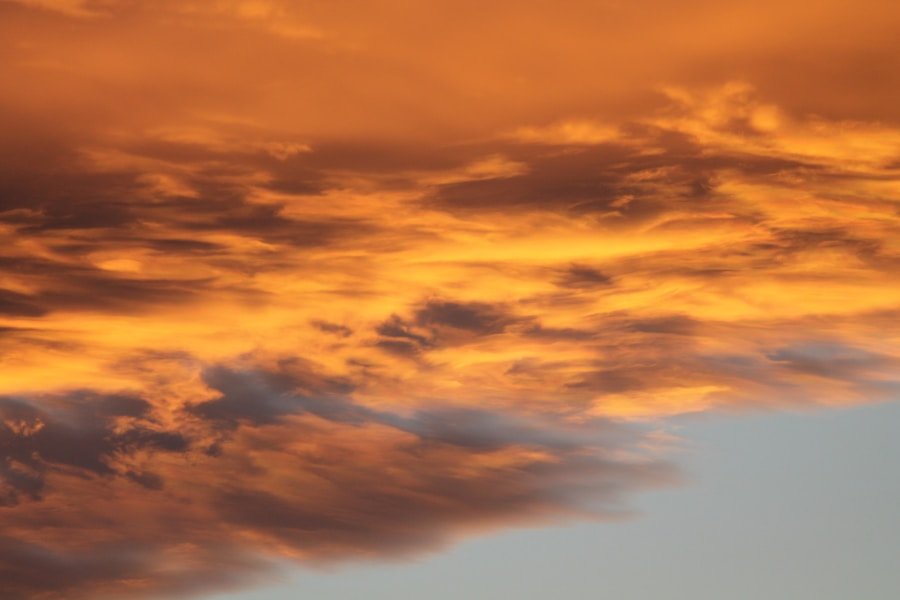

The golden hour, also known as the magic hour, is a period of time shortly after sunrise or before sunset when the light is soft, warm, and diffused, creating a stunning and magical atmosphere. This phenomenon occurs due to the angle of the sun as it approaches the horizon, which causes the light to pass through a greater thickness of the Earth’s atmosphere, scattering the shorter blue wavelengths and allowing the longer red and orange wavelengths to dominate the sky. This results in the warm, golden glow that is characteristic of the golden hour.
During the golden hour, the light is also less harsh and more directional, creating long, dramatic shadows and adding depth and dimension to your photographs. The warm, soft light also enhances the colors of the landscape, making them appear more vibrant and saturated. Understanding the science behind the golden hour is essential for capturing stunning sunrise and sunset images, as it allows photographers to anticipate and take advantage of the unique lighting conditions that occur during this magical time of day.
The golden hour is a fleeting and ephemeral moment that requires careful planning and timing to capture. It is a time when nature puts on a spectacular show, and being able to understand and anticipate the science behind it can help photographers create truly breathtaking images that capture the beauty and magic of this special time of day.
Choosing the Right Location: Finding the Perfect Spot for Your Sunrise or Sunset Photography
Choosing the right location is crucial for capturing stunning sunrise and sunset images. The location you choose will greatly impact the composition and overall impact of your photographs. When scouting for locations, consider factors such as the topography, natural features, and potential obstructions that could affect the quality of your images. Look for vantage points that offer unobstructed views of the horizon, such as hilltops, cliffs, or beaches, where you can capture the full glory of the rising or setting sun.
Consider also how the surrounding landscape will complement your sunrise or sunset images. Look for interesting foreground elements, such as trees, rocks, or bodies of water, that can add depth and visual interest to your compositions. Pay attention to the direction of the light and how it interacts with the landscape, as this will greatly impact the mood and atmosphere of your photographs. By carefully choosing the right location for your sunrise or sunset photography, you can ensure that you capture truly stunning and impactful images that showcase the beauty of these magical moments.
Finding the perfect spot for your sunrise or sunset photography requires careful planning and consideration. By choosing locations that offer unobstructed views of the horizon and interesting foreground elements, you can create compelling and visually striking images that capture the beauty and magic of these special moments.
Mastering Exposure: Tips for Achieving the Perfect Balance of Light and Shadow
Mastering exposure is essential for capturing stunning sunrise and sunset images. The dynamic range of light during the golden hour can be challenging to manage, as it often includes both bright highlights and deep shadows. To achieve the perfect balance of light and shadow in your photographs, it’s important to understand how to properly expose for these challenging lighting conditions.
One technique for achieving balanced exposure during sunrise and sunset photography is to use exposure bracketing. This involves taking multiple shots at different exposure settings to capture a range of highlights and shadows, which can then be blended together in post-processing to create a well-exposed final image. Another technique is to use graduated neutral density filters to balance the exposure between the bright sky and darker foreground, allowing you to capture detail in both areas without overexposing or underexposing either.
Additionally, it’s important to pay attention to your camera’s metering mode and use exposure compensation to adjust for challenging lighting conditions. By mastering exposure techniques such as bracketing, using filters, and adjusting your camera’s settings, you can achieve the perfect balance of light and shadow in your sunrise and sunset images, creating stunning and well-exposed photographs that capture the beauty of these magical moments.
Achieving balanced exposure during sunrise and sunset photography requires careful consideration of lighting conditions and mastering exposure techniques such as bracketing, using filters, and adjusting camera settings. By understanding how to properly expose for these challenging lighting conditions, photographers can capture stunning images that showcase the beauty of these magical moments.
Utilizing Filters: Enhancing Your Sunset and Sunrise Photography with Graduated ND and Polarizing Filters
Filters are essential tools for enhancing your sunset and sunrise photography. Graduated neutral density (ND) filters are particularly useful for balancing exposure during sunrise and sunset photography, as they allow you to darken bright areas of the sky while maintaining proper exposure in the foreground. This helps to capture detail in both the sky and landscape without overexposing or underexposing either.
Polarizing filters are also valuable for sunrise and sunset photography, as they can enhance colors, reduce glare, and increase contrast in your images. By rotating a polarizing filter, you can control reflections on water or glass surfaces, deepen blue skies, and reduce atmospheric haze, resulting in more vibrant and impactful sunrise and sunset images.
When using filters for sunrise and sunset photography, it’s important to invest in high-quality filters that are compatible with your lenses and offer accurate color reproduction. Additionally, it’s important to practice using filters before heading out to shoot sunrise or sunset images, as they require careful positioning and adjustment to achieve optimal results. By utilizing graduated ND and polarizing filters in your sunrise and sunset photography, you can enhance the beauty of these magical moments and capture stunning images that showcase the full glory of the golden hour.
Utilizing graduated ND and polarizing filters is essential for enhancing your sunrise and sunset photography. By using these filters to balance exposure, enhance colors, reduce glare, and increase contrast in your images, you can create stunning photographs that capture the beauty of these magical moments.
Composition Techniques: Creating Dynamic and Compelling Sunrise and Sunset Images
Composition is key to creating dynamic and compelling sunrise and sunset images. When composing your shots during the golden hour, consider using leading lines to draw the viewer’s eye into the scene, such as roads, rivers, or fences that lead towards the rising or setting sun. Additionally, look for interesting foreground elements that can add depth and visual interest to your compositions, such as rocks, trees, or bodies of water.
Pay attention to the rule of thirds when composing your sunrise or sunset images, placing key elements such as the horizon or focal points along one of the intersecting lines to create a balanced and visually appealing composition. Consider also using framing techniques to add depth and context to your images, such as using natural elements like trees or archways to frame the rising or setting sun.
When composing your sunrise or sunset images, it’s important to experiment with different angles and perspectives to find unique and compelling compositions. Consider shooting from low angles to capture dramatic silhouettes against the sky or from high vantage points to showcase expansive landscapes bathed in golden light. By using leading lines, interesting foreground elements, the rule of thirds, framing techniques, and experimenting with different angles and perspectives, you can create dynamic and visually striking sunrise and sunset images that capture the beauty of these magical moments.
Composition is essential for creating dynamic and compelling sunrise and sunset images. By using leading lines, interesting foreground elements, the rule of thirds, framing techniques, and experimenting with different angles and perspectives, photographers can create visually striking images that showcase the beauty of these magical moments.
Post-Processing Tips: Enhancing the Beauty of Sunsets and Sunrises in Lightroom and Photoshop
Post-processing is an essential step in enhancing the beauty of sunsets and sunrises captured during the golden hour. In post-processing software such as Adobe Lightroom or Photoshop, photographers can fine-tune their images by adjusting exposure, contrast, color balance, and saturation to bring out the full beauty of these magical moments.
One post-processing technique for enhancing sunrise and sunset images is to use graduated filters or adjustment brushes to selectively brighten or darken specific areas of the image. This allows photographers to balance exposure between bright skies and darker foregrounds while maintaining detail in both areas. Additionally, consider adjusting white balance settings to enhance warm tones in your sunrise or sunset images, bringing out the rich reds, oranges, and yellows that are characteristic of these magical moments.
Another post-processing technique for enhancing sunrise and sunset images is to use color grading tools to enhance or modify colors in your photographs. This allows photographers to create a specific mood or atmosphere in their images by adjusting hues, saturation levels, and luminance values. By carefully fine-tuning exposure, contrast, color balance, saturation levels, white balance settings, and color grading in post-processing software such as Lightroom or Photoshop, photographers can enhance the beauty of their sunrise and sunset images while maintaining a natural and realistic look.
Post-processing is an essential step in enhancing the beauty of sunsets and sunrises captured during the golden hour. By carefully fine-tuning exposure, contrast, color balance, saturation levels, white balance settings, color grading tools in post-processing software such as Lightroom or Photoshop photographers can enhance their sunrise and sunset images while maintaining a natural look.
Safety and Etiquette: Respecting Nature and Local Regulations While Chasing the Light
While chasing sunsets or sunrises for photography purposes can be an exhilarating experience, it’s important to prioritize safety and respect nature while capturing these magical moments. Always be mindful of your surroundings when shooting during low-light conditions at dawn or dusk. Be aware of potential hazards such as uneven terrain or slippery surfaces when shooting near bodies of water or on rocky coastlines.
Respecting local regulations is also crucial when photographing sunsets or sunrises in natural areas or public spaces. Always research local guidelines regarding access times, parking regulations, wildlife protection areas, or protected landscapes before heading out to shoot at a specific location. Additionally, be mindful of other visitors or wildlife in popular sunrise or sunset photography spots by maintaining a respectful distance from sensitive areas or habitats.
It’s important for photographers to prioritize safety and respect nature while chasing sunsets or sunrises for photography purposes. By being mindful of potential hazards when shooting during low-light conditions at dawn or dusk respecting local regulations regarding access times parking regulations wildlife protection areas protected landscapes maintaining a respectful distance from sensitive areas or habitats photographers can ensure that they capture stunning sunrise or sunset images while minimizing their impact on nature.
In conclusion capturing stunning sunrise or sunset images requires careful planning understanding lighting conditions mastering exposure techniques utilizing filters composing dynamic shots enhancing images through post-processing software prioritizing safety respecting nature local regulations while chasing sunsets sunrises for photography purposes. By following these tips photographers can create visually striking photographs that showcase the beauty magic of these special moments while minimizing their impact on nature respecting local regulations ensuring their safety well-being during their photography adventures chasing sunsets sunrises around world.