
Product photography lighting is crucial for creating high-quality images that effectively showcase the features and details of a product. Proper lighting can make a significant difference in the overall appearance of a product, highlighting its texture, color, and shape. It can also help to create a mood or atmosphere that resonates with the target audience. Without the right lighting, even the most visually appealing products can appear dull and unappealing in photographs.
Good product photography lighting can also help to convey the quality and value of a product. By using the right lighting techniques, you can emphasize the craftsmanship and attention to detail that went into creating the product, making it more desirable to potential customers. In addition, proper lighting can help to minimize imperfections and flaws, presenting the product in the best possible light.
Choosing the Right Lighting Equipment for Product Photography
When it comes to product photography lighting, choosing the right equipment is essential for achieving professional-looking results. There are several types of lighting equipment commonly used in product photography, including continuous lighting, strobe lighting, and LED lighting. Each type has its own advantages and drawbacks, so it’s important to consider your specific needs and budget when selecting the right equipment for your studio.
Continuous lighting is a popular choice for product photography because it provides a constant source of light that allows you to see exactly how the light will affect your subject before taking the shot. Strobe lighting, on the other hand, is known for its powerful output and fast recycling times, making it ideal for capturing fast-moving subjects or achieving high-speed sync with your camera. LED lighting is another versatile option that offers energy efficiency and adjustable color temperature, making it suitable for a wide range of product photography applications.
Setting Up Your Product Photography Lighting Studio
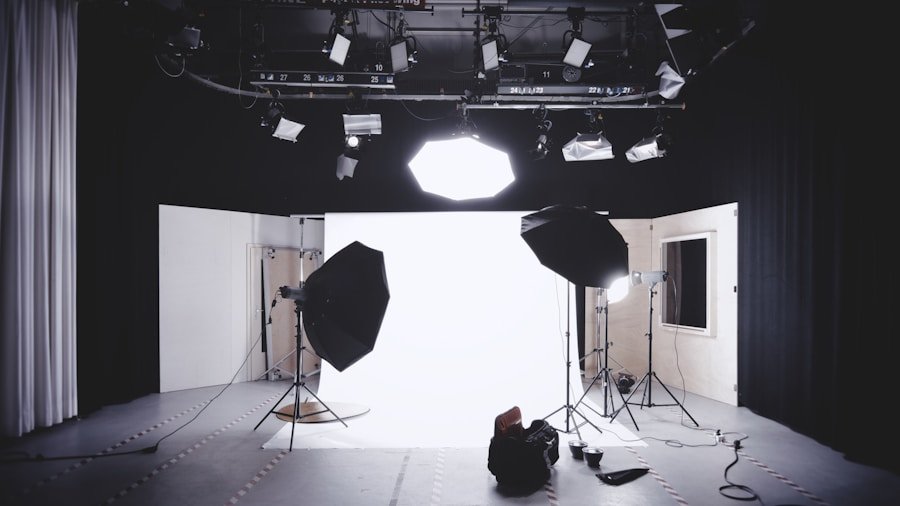
Creating a dedicated space for product photography is essential for achieving consistent and professional-looking results. When setting up your product photography lighting studio, it’s important to consider factors such as space, background options, and access to power outlets. You’ll also need to invest in essential accessories such as light stands, softboxes, reflectors, and diffusers to control and shape the light.
In addition to the physical setup of your studio, you’ll also need to consider the ambient lighting conditions in the space. Natural light can be a valuable asset for product photography, but it can also be unpredictable and difficult to control. If you’re working in a space with windows, consider using blackout curtains or blinds to block out unwanted light and create a consistent shooting environment.
Mastering Different Lighting Techniques for Product Photography
There are several lighting techniques that can be used to enhance product photography and create compelling images. One of the most common techniques is known as three-point lighting, which involves using three light sources to illuminate the subject from different angles. This technique helps to create depth and dimension in the image, highlighting the contours and details of the product.
Another popular lighting technique for product photography is known as light painting, which involves using a handheld light source to selectively illuminate specific areas of the subject. This technique can be used to create dramatic effects and draw attention to key features of the product. Additionally, backlighting can be used to create a halo effect around the edges of the product, adding a sense of drama and visual interest to the image.
Overcoming Common Lighting Challenges in Product Photography
Product photography lighting comes with its own set of challenges, and it’s important to be prepared to overcome them in order to achieve professional-looking results. One common challenge is dealing with reflections and glare on shiny or reflective surfaces. To minimize these issues, consider using polarizing filters or adjusting the angle of your lights to reduce unwanted reflections.
Another common challenge in product photography is achieving even lighting across the entire subject. This can be particularly difficult when photographing large or irregularly shaped products. To address this issue, consider using diffusers or reflectors to soften and redirect the light, creating a more uniform illumination.
Enhancing Your Product Photography with Creative Lighting Effects
In addition to mastering traditional lighting techniques, creative lighting effects can be used to add visual interest and uniqueness to your product photography. For example, colored gels can be used to add a pop of color to the background or highlight specific areas of the product. This can help to create a mood or atmosphere that aligns with the brand’s identity or target audience.
Another creative lighting effect that can enhance product photography is known as light sculpting, which involves using carefully placed shadows to create interesting patterns and textures on the subject. This technique can add depth and dimension to the image, making it more visually engaging and dynamic.
Tips for Achieving Professional-looking Product Photography with Lighting
Achieving professional-looking product photography with lighting requires attention to detail and a thorough understanding of how light interacts with different surfaces and textures. One important tip is to pay attention to the quality of light, as harsh or unflattering light can detract from the overall appearance of the product. Soft, diffused light is often preferred for product photography because it creates smooth transitions between highlights and shadows.
Another important tip is to experiment with different lighting setups and angles to find the most flattering and effective approach for each product. By taking the time to test different lighting configurations, you can identify the best way to showcase the unique features and characteristics of each item.
In conclusion, product photography lighting plays a crucial role in creating high-quality images that effectively showcase the features and details of a product. By understanding the importance of lighting, choosing the right equipment, setting up a dedicated studio space, mastering different lighting techniques, overcoming common challenges, enhancing images with creative effects, and following professional tips, you can achieve stunning results that will captivate your audience and drive sales.