
When it comes to street photography, the right camera can make all the difference. There are a few key factors to consider when choosing the perfect tool for capturing the essence of the streets. Firstly, size and weight are crucial. You want a camera that is lightweight and compact, allowing you to move around easily and discreetly. A mirrorless camera or a compact DSLR are great options for street photography, as they offer high-quality images without the bulk of a traditional DSLR.
Another important factor to consider is the camera’s autofocus system. Street photography often involves capturing fleeting moments, so having a fast and accurate autofocus system is essential. Look for a camera with advanced autofocus capabilities, such as eye detection and tracking, to ensure that you can capture sharp, in-focus images even in fast-paced street environments.
Finally, consider the camera’s low-light performance. Street photography often takes place in low-light conditions, so having a camera that performs well in low light is crucial. Look for a camera with a wide ISO range and good noise performance to ensure that you can capture stunning images even in challenging lighting situations.
Lens Selection: Choosing the Best Lenses for Street Photography
In addition to choosing the right camera, selecting the best lenses for street photography is equally important. Prime lenses are often preferred by street photographers due to their compact size, wide apertures, and sharp image quality. A 35mm or 50mm prime lens is a popular choice for street photography, as it offers a natural field of view and is versatile enough to capture a wide range of scenes and subjects.
Another important consideration when choosing lenses for street photography is the lens’s maximum aperture. A wide aperture, such as f/1.8 or f/2.8, allows for better low-light performance and creates a shallow depth of field, making it easier to isolate subjects from their surroundings and create compelling compositions.
Additionally, consider the lens’s focal length and its impact on perspective and composition. A wider focal length, such as 24mm or 28mm, can capture more of the scene and create a sense of immersion, while a longer focal length, such as 85mm or 135mm, can compress the perspective and isolate subjects from their surroundings.
Camera Settings: Optimizing Your Camera for Street Photography
Once you have the right camera and lenses for street photography, it’s important to optimize your camera settings to ensure that you can capture the best possible images in any street environment. Firstly, consider shooting in aperture priority mode to have control over the depth of field while allowing the camera to automatically adjust the shutter speed for proper exposure. This mode is particularly useful for street photography, as it allows you to quickly adjust the aperture to capture different scenes and subjects without having to worry about setting the shutter speed manually.
Additionally, consider using a higher ISO setting to compensate for low-light conditions and ensure that you can capture sharp, noise-free images even in challenging lighting situations. Modern cameras are capable of producing high-quality images at higher ISO settings, so don’t be afraid to push the ISO to maintain a fast shutter speed and freeze motion in fast-paced street environments.
Finally, consider using continuous autofocus mode and back-button focus to ensure that your camera can quickly and accurately focus on moving subjects without having to constantly refocus between shots. These settings can help you capture sharp, in-focus images of fleeting moments and spontaneous scenes without missing a beat.
Bag Essentials: Carrying Your Gear Safely and Conveniently
When it comes to street photography, having the right bag to carry your gear safely and conveniently is essential. Look for a bag that is lightweight, comfortable to wear, and discreet to avoid drawing attention to yourself while shooting on the streets. A messenger bag or a small backpack with padded compartments for your camera and lenses is a great option for street photography, as it allows you to carry your gear securely while keeping it easily accessible for quick shooting opportunities.
Additionally, consider investing in a rain cover or a weather-sealed bag to protect your gear from the elements while shooting outdoors. Street photography often involves shooting in unpredictable weather conditions, so having a bag that can keep your gear dry and protected is crucial for ensuring that you can continue shooting without worrying about damaging your equipment.
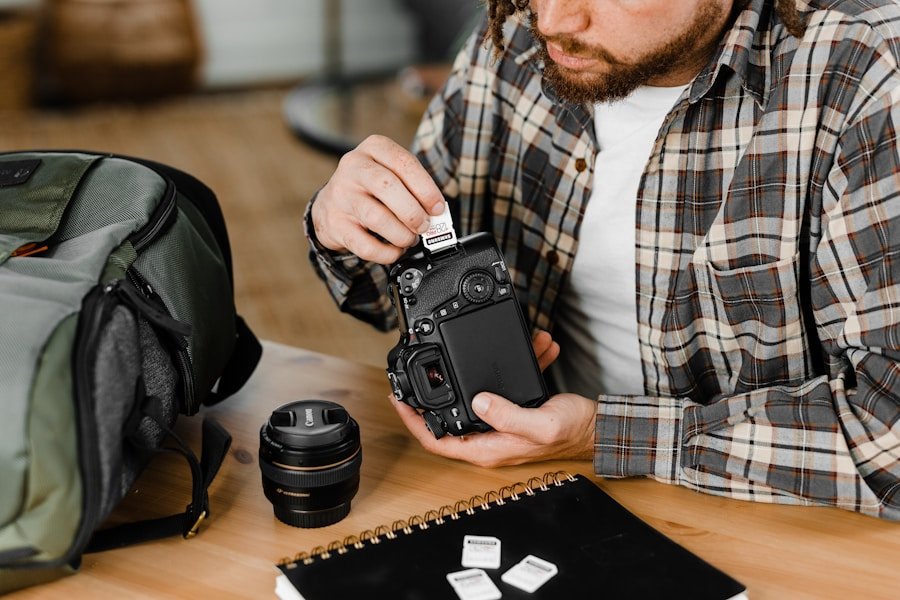
Finally, consider using a bag with customizable dividers and compartments to organize your gear efficiently and keep it safe from bumps and scratches while on the move. This will allow you to carry all the essentials for street photography, such as extra batteries, memory cards, and cleaning supplies, without adding unnecessary bulk or weight to your bag.
Additional Accessories: Must-Have Tools for Street Photographers
In addition to the right camera, lenses, and bag, there are a few additional accessories that can enhance your street photography experience and help you capture stunning images on the streets. Firstly, consider investing in a compact tripod or monopod to stabilize your camera and capture long exposures or sharp images in low-light conditions. A small, lightweight tripod can be easily carried in your bag and set up quickly when needed, allowing you to capture stunning night scenes or create long-exposure effects without compromising image quality.
Another essential accessory for street photography is a lens hood or a polarizing filter to reduce glare and reflections and enhance color saturation in your images. These accessories can help you capture vibrant, contrasty images with rich colors and minimize unwanted distractions caused by reflections or harsh light.
Finally, consider carrying a portable external flash or a reflector to add fill light and create dynamic lighting effects in your street portraits or candid shots. A small flash or reflector can help you overcome challenging lighting situations and add depth and dimension to your images without relying solely on natural light.
Editing Software: Enhancing and Organizing Your Street Photography
After capturing stunning images on the streets, it’s important to have the right editing software to enhance and organize your street photography. Look for a versatile editing program that offers powerful tools for adjusting exposure, color balance, and sharpness while allowing you to organize and categorize your images efficiently.
Adobe Lightroom is a popular choice among street photographers due to its comprehensive editing capabilities and intuitive organization features. With Lightroom, you can easily adjust exposure, contrast, and color balance in your images while creating custom presets and organizing your photos into collections or albums for easy access and sharing.
Additionally, consider using Photoshop or other advanced editing software for more complex retouching and creative effects in your street photography. These programs offer powerful tools for advanced image manipulation, compositing, and creative editing techniques that can take your street photography to the next level and help you create unique, compelling images that stand out from the crowd.
Finally, consider using cloud storage or external hard drives to back up and archive your street photography collection securely. This will ensure that your images are safe from loss or corruption while allowing you to access them from anywhere and share them with others easily.
Maintenance and Care: Keeping Your Gear in Top Condition for Street Photography
To ensure that your gear remains in top condition for street photography, it’s important to maintain and care for it regularly. Firstly, keep your camera and lenses clean by using a soft brush or air blower to remove dust and debris from the surfaces before wiping them gently with a microfiber cloth or lens cleaning tissue. This will help prevent scratches and maintain optimal image quality in your photos.
Additionally, consider using a protective filter on your lenses to shield them from scratches, fingerprints, and other damage while shooting on the streets. A UV filter or a clear protective filter can provide an extra layer of defense against accidental bumps or impacts without compromising image quality.
Finally, store your gear in a dry, cool environment when not in use to prevent moisture buildup or mold growth that can damage sensitive electronic components or optical elements. Consider using silica gel packs or dehumidifiers in your camera bag or storage area to absorb excess moisture and maintain optimal conditions for your gear.
By following these maintenance tips and caring for your gear regularly, you can ensure that your camera and lenses remain in top condition for street photography and continue capturing stunning images on the streets for years to come.